Baththa
By Akilan · 20 October 2026 · 4 min read
- There’s so much humanity not being explored in today’s Indian cinema, by excluding and ignoring the worlds of one large population living among us - children. Tackling their innocence and complexity is not an easy ask, and I'm grateful for this film gracing our screens. Spoilers ahead.
- Balaji Tharaneetharan has crafted and built this screenplay with utmost care, the flow is lovely to experience and to think about in retrospect too. The carpenter making the door, the very first line we hear from Baththa - “Andha bayam irukkattum...”, Sabari's inexpressible nature in his intro, the first instance of Baththa’s singing being shutdown by his daughter, there’s so much to look back to!
- All of these events transpire in a very poised manner, akin to a short-story stretched out elegantly to a feature-length screenplay. The actors, an unhurried edit and strategically built montage songs, work together to deliver this pleasant effect. This can be said about the director's other works too. There's a parallel thread with piece of torn paper, with Sabari's writing, that floats around in the air, bringing in an other-worldly feel to the proceedings.
- The only bit I’d have pulled back on, is the reiteration of Baththa’s adamant masculinity. That he is a paper tiger gets repeated more than necessary. The intro fight, his sidekicks, and then the first scene with his family seals it - so I wondered if there was even a need for an intro song, beyond the external commercial purpose. With everything in the setup eventually resulting in payoffs of all sizes, and for being a lukewarm track, “Ooroda Oththa Don” all the more feels unwanted.
- Vijay Sethupathi is clearly playing Baththa with a tone of comical irony - so was it really needed for the song (at times, even the score) to accentuate this tone? I liked Sai Abhyankkar’s tracks, and he delivers a good central melody - Magale - that echoes through the film. This is quite a mature narrative to take on, for its period and the poise in Tharaneetharan's work, and he's done a neat job with the score. But I have to admit that I did think of what-could-have-beens due to the kind of material this is.
- But for the cornerstone that the climax version of the song is, I personally would have designed it around a non-singer’s ability to deliver the track on a tad more cinematic note, even if that took away from the realism. Because even though it’s a warm and wholesome idea on paper, I sensed a lack of punch. The smiles and idea of it, sell the moment more than Sethupathi’s singing. I'm aware that it can be argued that this might have been the point, but worth a thought?
- It’s beautiful how the instances of misdirection here seem so tastefully done. Be it Baththa’s gaze toward Sabari as he leaves the hospital ward - it’s almost like he already knows that Sabari is the culprit behind his ordeal, but the timing and length of this shot is so appropriate that we can’t quite tell for sure if he does know. Same with the scene at the potti kadai where the owner identifies Sabari as the boy who buys rusk - we think Baththa is angry with Sabari being “exposed”, but he was simply unsettled by the idea of rusk itself! The meter at which the actors perform these initial reactions, and the editing, make complete sense when their truth is revealed. This is very measured direction.
- Tharaneetharan's choices are largely inspiring, and even the action blocks here have some freshness to them with how the camera floats and hovers in those particular settings. Watch how he uses the very open skies in the last action block that happens in a narrow road with fields on both sides (props to cinematographer Selvakumar SK as well).
- The zenith of this film is the confession scene. While the audience's expectations are for the narrative to take more twisty/intelligent turns, Tharaneetharan resolves it with something better - a conversation, with courageous honesty and a hug that follows. By making Baththa listen to this child without saying a word, the writer makes way for Sabari to be absolutely lucid with what he wants to say. There's more truth to hear than what we'd expect. This will go down among my most favourite hugs in cinema.
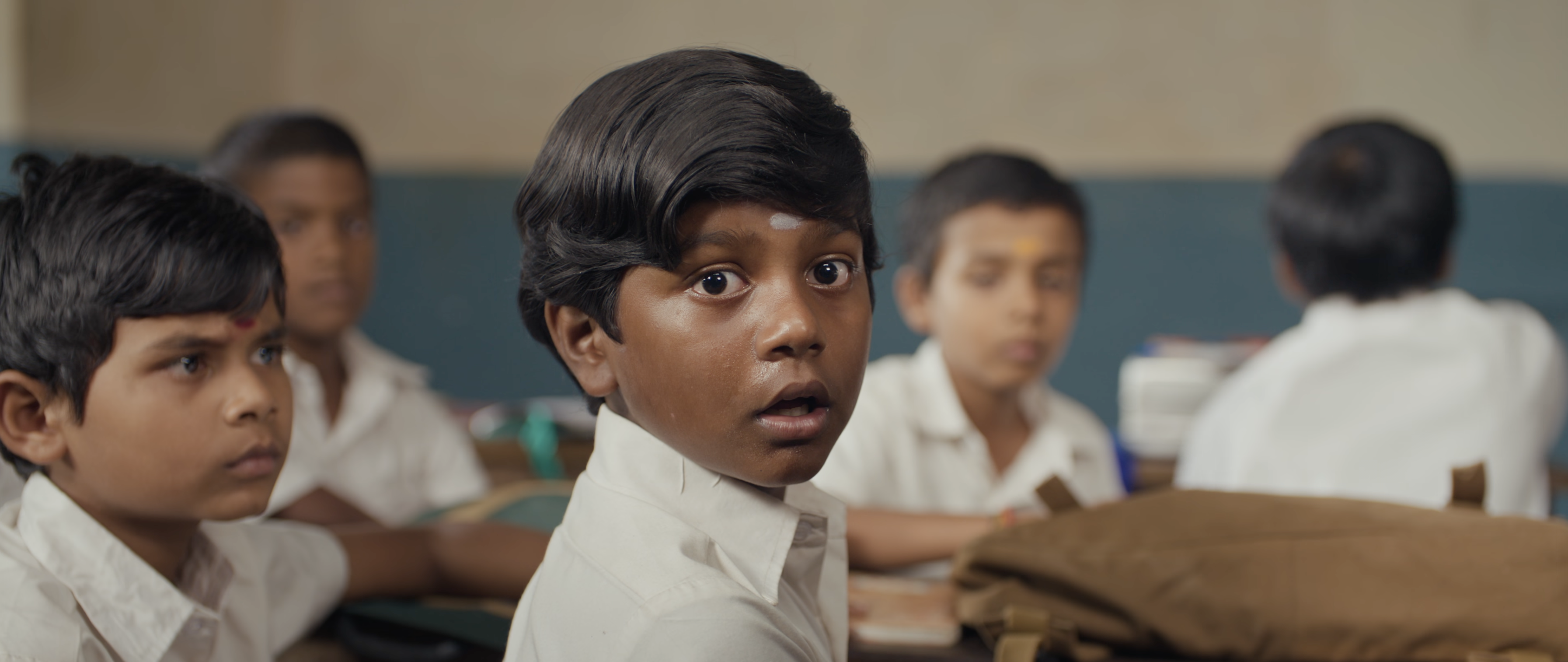
- The few moments of Sabari’s smile are so precious. Even a fake smile in the car, or the genuine smile while watching a movie, or on a bike ride - they standout so well for how long Balaji holds back on showing us this side of the little boy. Sai Prithviraj’s lightness after the confession episode is very palpable. I did wish Balaji could've prolonged that beat for just a minute more (before moving on to the action block), giving us some more time to celebrate the emotional offloading that has just transpired. Sai's honesty and brevity in this scene are very evident, in spite of some rough edges in the dubbing. It's a feat to have moulded a performance as internal as this from a child actor - it's a long stretch of just him being scared to express around a lot of adults, and sustaining this scared-y undercurrent is great direction.
- This is a great cast overall. Lijomol Jose brings a memorable personality to the affectionate Kannima, at times towering over Sethupathi and bringing much-needed freshness alongside his familiarity. Santhy Balachandran's strict mother in Selvi, works in tandem with Hari Krishnan's hesitant Thirunavukarasu. Everybody is in sync with the slightly heightened nature of the world, and there's no awkwardness anywhere. The wide-eyed shock we see in Balaji's characters, both in NKPK and Seethakathi, finds yet another memorable face in Sai Prithviraj.
- "Balaji Tharanatheeran's work is like that of a student who goes the extra mile for neatness in the answer paper" is what I'd tweeted after watching Oru Pakka Kadhai, almost 6 years ago. And this nature of his work is very much alive and getting stronger. Here's to seeing more thorough and sincerely written films from him.